


Layering is one of the best ways to wear Cuban link chains. Two or three chains at different lengths and widths create depth and make even simple outfits look considered. But layering can also go wrong. Chains that are too close in length tangle. Chains that are too similar in width blend into one thick band. Too many pieces can look cluttered.
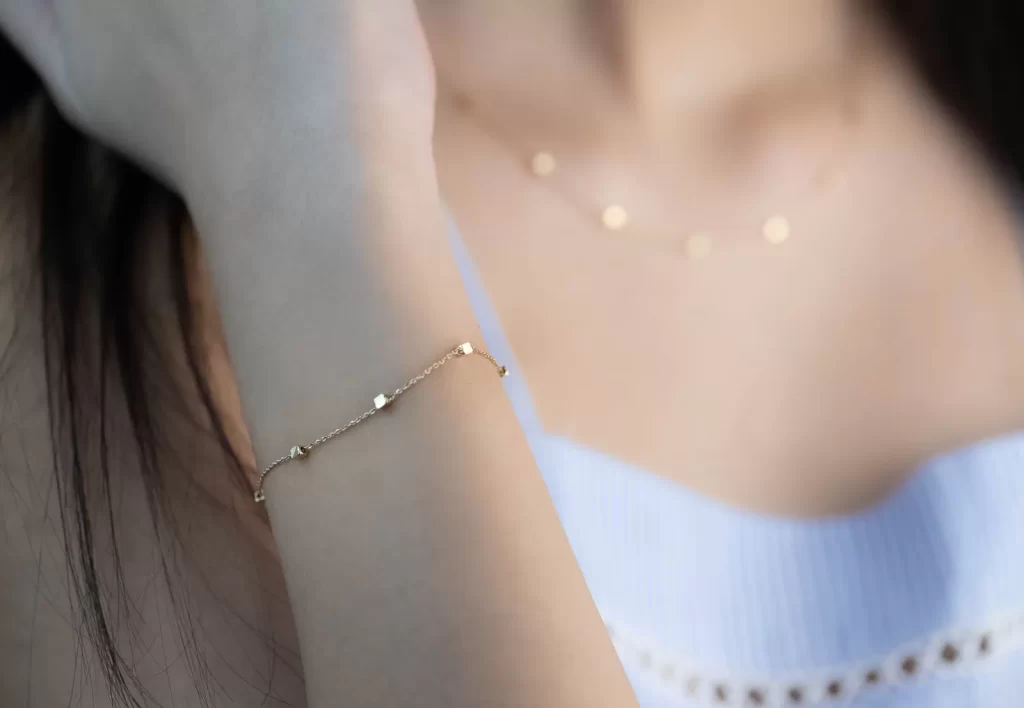
Here is how to build a layered look that works.
The basic rule: space your lengths
The most important part of layering is the gap between lengths. Each chain needs its own space so the eye can see it and so the chains do not twist together. A gap of about two inches works for most combinations:
- Two chains: 20 and 22 inches, or 18 and 20 inches.
- Three chains: 18, 20 and 22 inches, or 20, 22 and 24 inches.
With wider chains, increase the gap to about two and a half or three inches, because thick links take up more vertical space.
Vary the widths
If all your chains are the same width, the stack looks like one wide, uneven chain. Varying the widths gives each chain a role:
- Thin + medium: a 3mm and a 6mm Cuban is a classic everyday pairing.
- Thin + bold: a 4mm with a 10mm creates strong contrast.
- Three-piece: 3mm, 5mm and 8mm gives a graduated stack.
A useful guideline is to put the narrowest chain at the shortest length and the widest at the longest. That way the heavier chain sits lower, which tends to look more balanced. The reverse can also work for a deliberately bold collar look, with a wide chain close to the neck and a slim chain below it.
Mix chain styles
Layering is not limited to Cuban links. Mixing a Cuban with other chain styles adds texture:
- Cuban + rope chain: the twist of a rope contrasts with the flat Cuban links.
- Cuban + Figaro: the alternating Figaro pattern adds rhythm.
- Cuban + tennis chain: pairing gold links with a line of stones adds sparkle.
- Cuban + box or snake chain: sleek, thin chains work well as a delicate top layer.
Keep at least one Cuban as the anchor, and let the others add contrast.
Metals: match or mix?
Matching metals, such as all yellow gold, gives a clean, cohesive look. Mixing yellow, white and rose gold is more fashion-forward and works best when the mix looks deliberate, for example by repeating each metal elsewhere, like a white gold watch with a white gold chain in the stack.
If you mix solid gold with plated pieces, the colors may not match exactly, and plated pieces may fade faster. Keep that in mind when building a stack you plan to wear often.
Adding a pendant
A pendant gives a layered look a focal point. Put it on the longest chain so it sits on the chest without crowding the other layers. A slim Cuban, rope or box chain usually carries a pendant better than a very wide Cuban, which can overpower it. Make sure the pendant’s bail is large enough to slide over the chain.
Layering by occasion
Everyday
Two chains are enough: a thin 3 to 4mm Cuban at 18 or 20 inches and a 5 to 6mm Cuban two inches longer. It is subtle, easy to wear and works with T-shirts and open collars.
Going out
Try three layers with more contrast: a thin chain, a medium Cuban and a longer chain with a pendant, or a wide Cuban paired with a tennis chain.
Statement
A wide Cuban at a shorter length with a medium Cuban below it creates a bold, high-impact look. Keep the rest of your accessories simple.
Layering for women
Popular women’s stacks include a 16-inch fine chain, an 18-inch 3mm Cuban and a 20-inch chain with a small pendant. With lower necklines, longer layers of 22 to 24 inches add drama. For a more minimal look, a single 4mm Cuban paired with one delicate chain is often enough.
Layering for men
A common men’s stack is a 5mm Cuban at 20 inches with an 8mm Cuban at 22 inches. For a more relaxed look, pair a 6mm Cuban at 22 inches with a slim rope chain and pendant at 24 inches. Very wide chains are often best worn alone or with just one thin companion.
Preventing tangles
- Keep length gaps of at least two inches.
- Use chains of different weights; heavier chains stay put and help prevent twisting.
- Try a layering clasp or a multi-strand connector, which keeps chains separated at the back.
- Put chains on one at a time, shortest first.
- Take them off one at a time and store them separately.
Comfort and weight
Several solid gold chains together can be heavy. If you are layering for a full day, balance one heavier chain with lighter ones. Pay attention to how the clasps sit at the back of your neck; several clasps together can feel bulky, so stagger them slightly.
Common layering mistakes
- Chains too close in length, so they tangle and overlap.
- All the same width, so the stack loses definition.
- Too many chains for the outfit or occasion.
- A large pendant on the shortest chain, which crowds the neck.
- Mixing very different metal tones without intent.
Start simple
If you are new to layering, start with two chains: one thin, one medium, two inches apart. Once that feels natural, add a third layer or a pendant. Layering is personal, and the best stacks evolve over time as you add pieces you love.
Shopping for a chain?
Compare current prices, weights and reviews for gold layering necklace set options on Amazon. Always check the stated karat, construction and gram weight before you buy.
Frequently asked questions
How many chains should I layer?
Two or three is the sweet spot. More than three works for a deliberate maximalist look, but it can easily look busy and tangle.
Can I layer gold and silver chains together?
Yes, if it looks intentional. Repeating each metal elsewhere, such as in a ring or watch, ties the look together.
How do I stop layered chains tangling?
Keep at least two inches between lengths, vary the weights, and consider a layering clasp that keeps each strand separate at the back of the neck.
Should the widest chain be on top or bottom?
Most people put the widest chain at the longest length, so the heaviest piece sits lowest. Reversing it creates a bold collar effect.
