
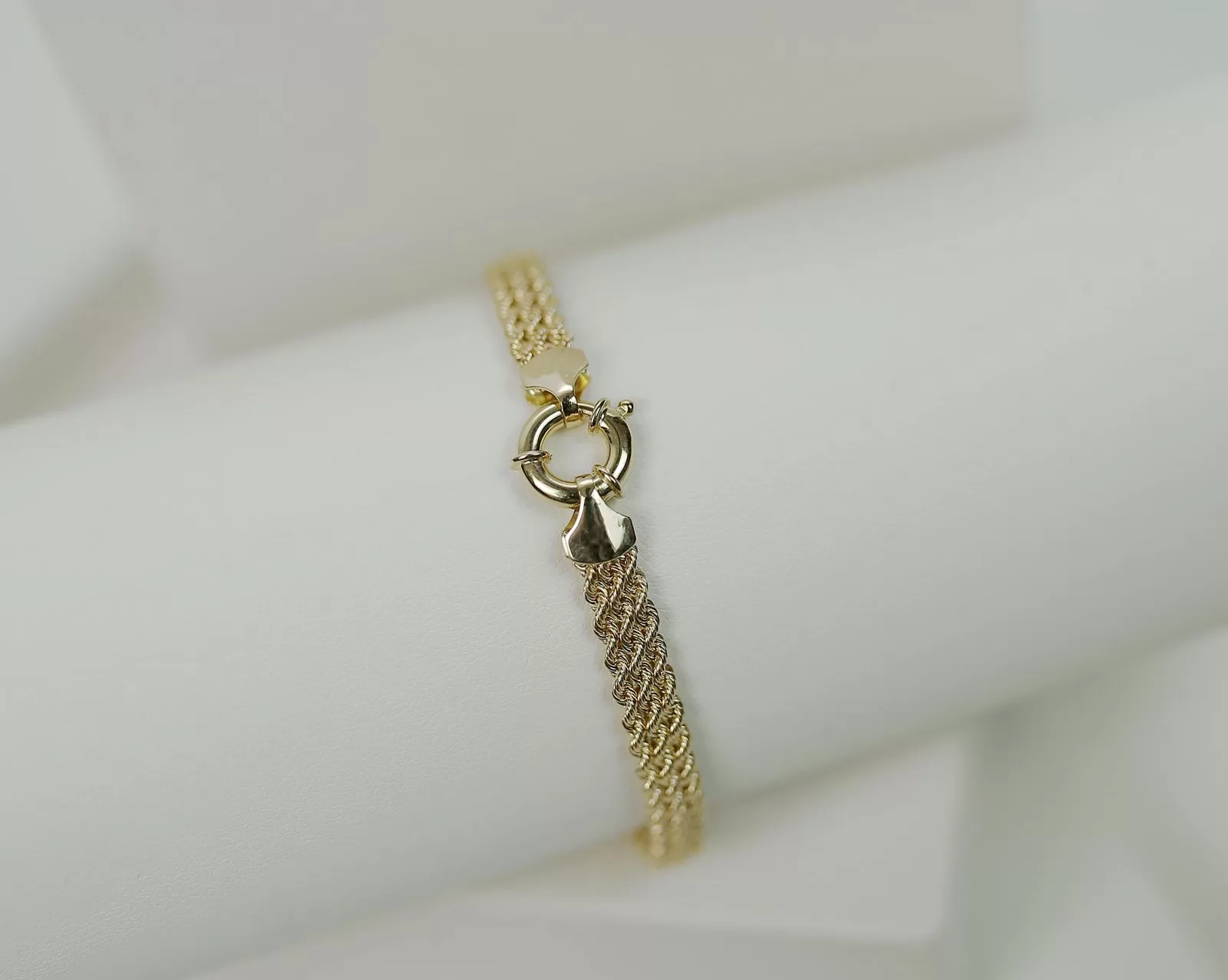

People spend a long time choosing the width, length and karat of a Cuban link chain, and almost no time looking at the clasp. That is a mistake, because the clasp is where most chains fail. A strong chain with a weak clasp is still a chain you can lose on the street.
This guide explains the main clasp types you will see on Cuban links, which ones suit which widths, and how to tell a good clasp from a poor one.
Why the clasp matters so much on a Cuban link
Cuban links are dense, especially in solid gold. A heavy chain puts constant load on the clasp, and that load increases every time the chain swings, catches on clothing or gets tugged. The clasp also opens and closes every time you put the chain on and take it off, so it takes far more wear than any single link. Over years, a cheap clasp can loosen, bend or snap.
The box clasp
The box clasp is the standard on most Cuban link chains from about 6mm upward. One end of the chain has a hollow box; the other end has a flat, spring-loaded tongue that slides into the box and clicks shut. To open it, you press a small push-button or lever.
The best box clasps add one or two safety latches on the sides. These are small figure-eight or hook catches that close over a pin. Even if the main clasp opens accidentally, the latches hold the chain closed.
Pros:
- Very secure, especially with double safety latches.
- Looks seamless; the box blends into the chain’s width.
- Easy to open and close once you are used to it.
Cons:
- The tongue can wear over years and lose some spring. A jeweler can usually adjust or replace it.
- Slightly fiddly the first few times.
The lobster claw clasp
The lobster claw is a small spring-loaded hook that closes over a ring at the other end of the chain. It is common on thinner chains, up to about 5 or 6mm.
Pros:
- Simple and easy to use.
- Cheap to replace if it wears out.
- Fine for light chains.
Cons:
- Looks small and out of proportion on a wide chain.
- The spring can weaken over time.
- Not ideal for heavy chains, because all the load sits on a small hook.
A lobster claw on a heavy 10mm chain is a warning sign that the maker cut corners.
The fold-over or “Miami” clasp
Some Cuban links, especially those sold as Miami Cuban links, use a fold-over clasp. It works a bit like a watch bracelet clasp: a hinged section folds over and snaps shut, often with an additional safety catch. Some versions are designed to look almost identical to the chain links when closed.
Pros:
- Very secure when well made.
- Blends neatly into the chain.
- Strong enough for heavy chains.
Cons:
- More complex, so repairs can be more involved.
- Quality varies widely between makers.
Iced clasps
On iced-out Cuban links, the clasp is often set with stones to match the chain. These are usually box clasps with safety latches, sometimes with a decorative “lock” design. Check that the stones are securely set on the clasp, because it is the part that gets handled most.
Which clasp for which width?
| Chain width | Typical clasp | What to look for |
|---|---|---|
| 3–5mm | Lobster claw or small box clasp | Solid spring, clasp in the same karat |
| 6–9mm | Box clasp | At least one safety latch |
| 10–14mm | Box or fold-over clasp | Double safety latches, sturdy tongue |
| 15mm+ | Heavy box or fold-over clasp | Double latches, strong hinge, thick walls |
How to check a clasp before you buy
- Listen for the click. A good box clasp closes with a clear, firm click.
- Tug gently. With the main clasp closed and latches open, pull the ends apart gently. It should not slip.
- Check each latch. Each safety latch should close over its pin and stay put without being held.
- Look for the stamp. Many clasps carry the karat stamp. If the chain is solid 14K, the clasp should be too.
- Feel the edges. No sharp corners or rough solder joints that could catch on skin or clothing.
Signs of a poorly made clasp
A few details give away a clasp that was made to save money rather than to last:
- A thin, flimsy tongue. On a box clasp, the tongue should feel stiff and spring back firmly when pressed. A tongue that bends easily will lose its grip quickly.
- A different metal. If the chain is gold but the clasp looks slightly different in color or carries no stamp, it may be a cheaper alloy or plated base metal, which wears and corrodes faster.
- Loose latches. Safety latches that swing freely or do not snap over their pins offer little real protection.
- A gap between box and chain. The box should sit flush with the end links. A visible gap or wobble suggests poor soldering.
- Rough finishing. Visible file marks, excess solder or uneven edges inside the box can stop the tongue seating properly.
Upgrading the clasp on an existing chain
If you already own a Cuban link with a weak clasp, you do not need a new chain. A jeweler can usually fit a stronger box clasp with safety latches to an existing chain, matched to the same karat. The cost depends on the gold weight of the new clasp and the labor, but it is almost always a fraction of the chain’s value. It is a particularly worthwhile upgrade on heavy chains that came with a lobster claw.
Putting a box clasp on with ease
Box clasps can feel awkward at first, especially behind your neck. A simple technique helps: hold the box end in your dominant hand and the tongue end in the other, bring them together in front of your chest, close the clasp and latches there, then rotate the chain so the clasp moves to the back. Reverse the process to take it off. It protects the tongue from being forced at an angle and makes it far easier to check that the latches are closed.
Looking after your clasp
Open and close the clasp gently rather than forcing it. Make sure the safety latches are closed every time you put the chain on. Once or twice a year, check that the tongue still clicks firmly; if it feels loose, a jeweler can tighten it in minutes. Clean the inside of the box with a soft brush, because dirt and lotion build up there and can stop the tongue engaging fully.
When to replace a clasp
If the clasp opens on its own, if a latch no longer stays closed or if the tongue no longer clicks, have it repaired or replaced before you wear the chain again. Replacing a clasp is far cheaper than replacing a lost chain. For valuable chains, many owners have a jeweler inspect the clasp once a year, just as they would service a watch.
Shopping for a chain?
Compare current prices, weights and reviews for cuban link chain box clasp options on Amazon. Always check the stated karat, construction and gram weight before you buy.
