
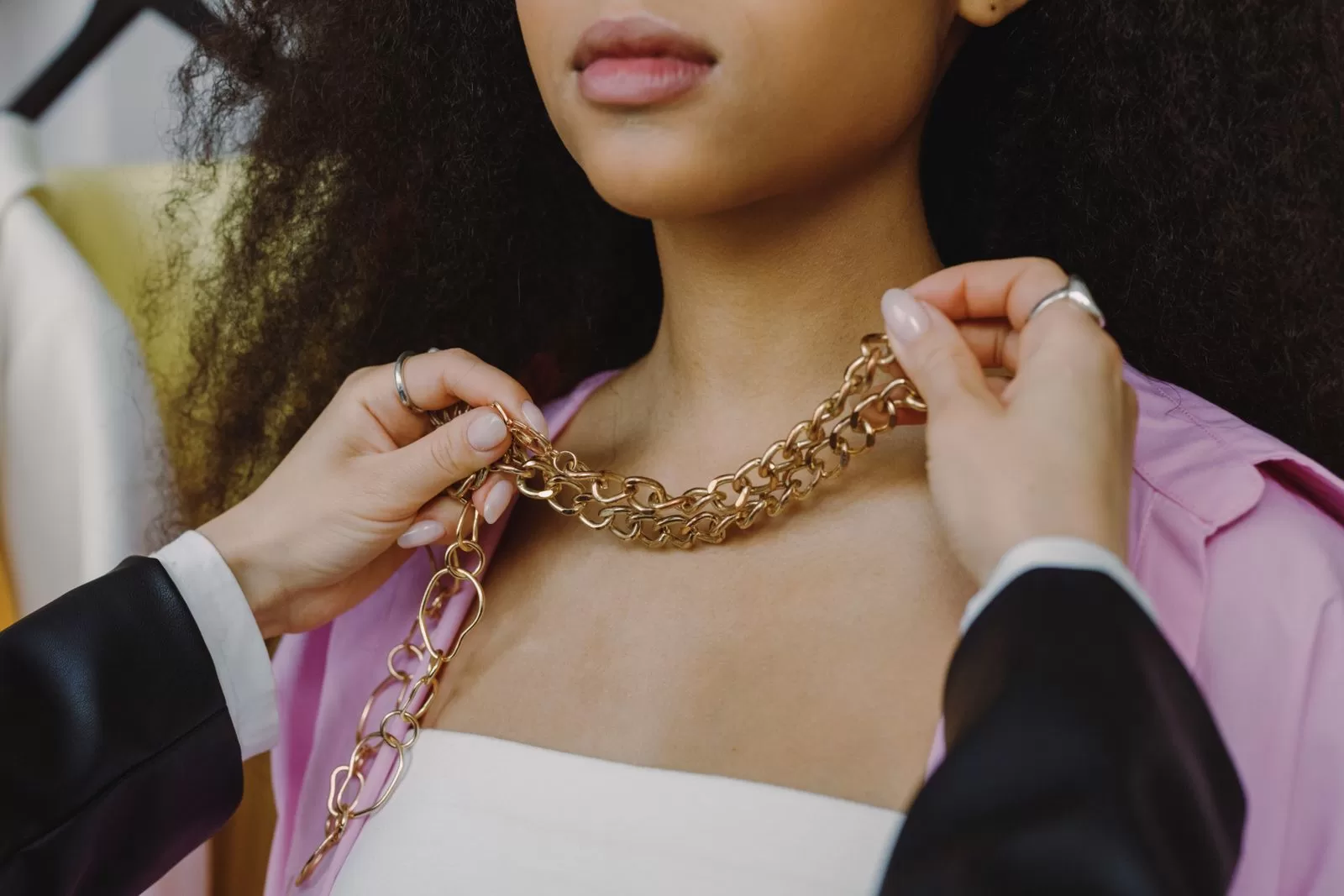

Shop for Cuban link chains and you will quickly see two names: “Cuban link” and “Miami Cuban link”. Sometimes they are used interchangeably. Sometimes sellers use “Miami Cuban” to describe a specific version of the style. Understanding the difference helps you know what you are buying and compare prices fairly.

Key takeaways
- Both are variations of the curb chain with rounded, interlocking links twisted to lie flat.
- “Miami Cuban” usually describes thicker, more tightly packed links with a denser, heavier feel.
- Traditional Cubans can have slightly more space between links and a lighter, more flexible drape.
- Miami Cubans often use box or fold-over clasps designed to blend into the links.
- Names are not standardized; always compare width, weight and link shape rather than the label alone.
What both have in common
Both styles share the same basic structure: oval or rounded links, connected in a continuous chain and twisted so the links lie flat against each other. When laid on a table, both form a smooth, flat ribbon of interlocking links. Both are available in gold, silver and steel, in widths from a few millimeters to over twenty.
Link tightness
The main difference most sellers mean is how tightly the links are packed. Miami Cuban links are usually compressed so that each link sits very close to its neighbors, with little visible space. This creates a denser, more solid-looking surface. Traditional or “classic” Cuban links may have slightly more space between links, which shows more of each link’s shape.
Link thickness and shape
Miami Cubans often have thicker, rounder links that stand taller off the skin. Classic Cubans may have slightly flatter links. The difference can be subtle in narrow widths but becomes obvious in wide chains, where Miami Cubans look chunkier and more three-dimensional.
Weight
Because the links are thicker and more tightly packed, a Miami Cuban usually weighs more than a classic Cuban of the same width and length in solid gold. More gold means a higher price and a heavier feel on the neck. For buyers who equate weight with quality, the Miami version is often preferred.
Flexibility and drape
Tighter links make Miami Cubans a little stiffer. They hold a rounded shape on the neck rather than draping into a V. Classic Cubans tend to be slightly more flexible and drape more naturally, which some people find more comfortable, especially in longer lengths.
Clasps
Miami Cubans are commonly fitted with box clasps that match the chain’s width, often with double safety latches. Some use fold-over clasps designed to look almost like part of the chain when closed. Classic Cubans use a wider range of clasps, including lobster claws on slimmer versions.
Finish
Both styles come in high polish and diamond-cut finishes. Miami Cubans are frequently polished to a high shine to emphasize their solid, dense look, and are a common base for iced designs where stones are set across each link.
Price
For the same width and length, a solid gold Miami Cuban is often more expensive simply because it contains more gold. Comparing price per gram is a fairer way to assess value between the two styles.
Comparison at a glance
| Miami Cuban | Classic Cuban | |
|---|---|---|
| Link spacing | Very tight | Slightly more open |
| Link profile | Thicker, rounder | Often flatter |
| Weight (same width) | Heavier | Lighter |
| Drape | Stiffer, rounded | More flexible |
| Typical clasp | Box or fold-over | Box or lobster |
| Price (same width, solid) | Higher | Lower |
Why the names get confusing
There is no official standard for these names. Some sellers call any Cuban link a “Miami Cuban” for marketing reasons. Others use “Cuban” for what another seller would call Miami. The terms also vary between countries and manufacturers. That is why it is important to look beyond the label.
How to compare two chains
- Width: measured across a link.
- Weight: in grams for the same length; heavier usually means thicker, tighter links.
- Photos: close-ups showing link spacing and thickness.
- Side view: how tall the links stand off a flat surface.
- Clasp: type and size.
Which should you choose?
Choose a Miami Cuban if you want maximum presence, a dense and heavy feel, and a bold look, especially in wider widths.
Choose a classic Cuban if you prefer a lighter, more flexible chain, a slightly more refined look, or a lower price for the same width.
Both are excellent choices. The best way to decide is to see or try both in your preferred width.
How the two feel to wear
On the neck, the difference is easy to notice. A Miami Cuban feels dense and sits in a firm curve, with a satisfying weight that many wearers love. It tends to stay in place and rarely flips. A classic Cuban feels a little lighter and more relaxed, moving more with your body and draping closer to the chest. If comfort over long days matters most, the classic version is often easier to wear; if presence matters most, the Miami version delivers.
Iced versions
Iced Cuban links are most often built on the Miami style, because the thicker, wider link surfaces give more room to set stones. Prong-link and pavé iced Cubans almost always use tight, chunky links so the stones form a continuous surface. If you plan to buy an iced chain, expect it to have Miami-style proportions and weight.
Bracelets in both styles
Bracelets follow the same pattern. Miami Cuban bracelets are chunky, stiff and heavy, which gives them strong wrist presence but less flexibility. Classic Cuban bracelets curve around the wrist more easily. For a matching set, choose the same style for chain and bracelet so the link shape matches.
Shopping for a chain?
Compare current prices, weights and reviews for miami cuban link chain options on Amazon. Always check the stated karat, construction and gram weight before you buy.
Frequently asked questions
Is a Miami Cuban better than a regular Cuban?
Not better, just different. It is heavier and denser, which some people prefer, but it also costs more.
Are Miami Cuban links made in Miami?
Not necessarily. The name refers to the style, which became popular in Miami. Chains are made in many countries.
Why is my Miami Cuban so stiff?
Tight, thick links reduce flexibility. It often loosens slightly with wear.
Can I match a Miami Cuban chain with a classic Cuban bracelet?
You can, but the difference in link shape may be noticeable. For a true set, choose the same style.
