
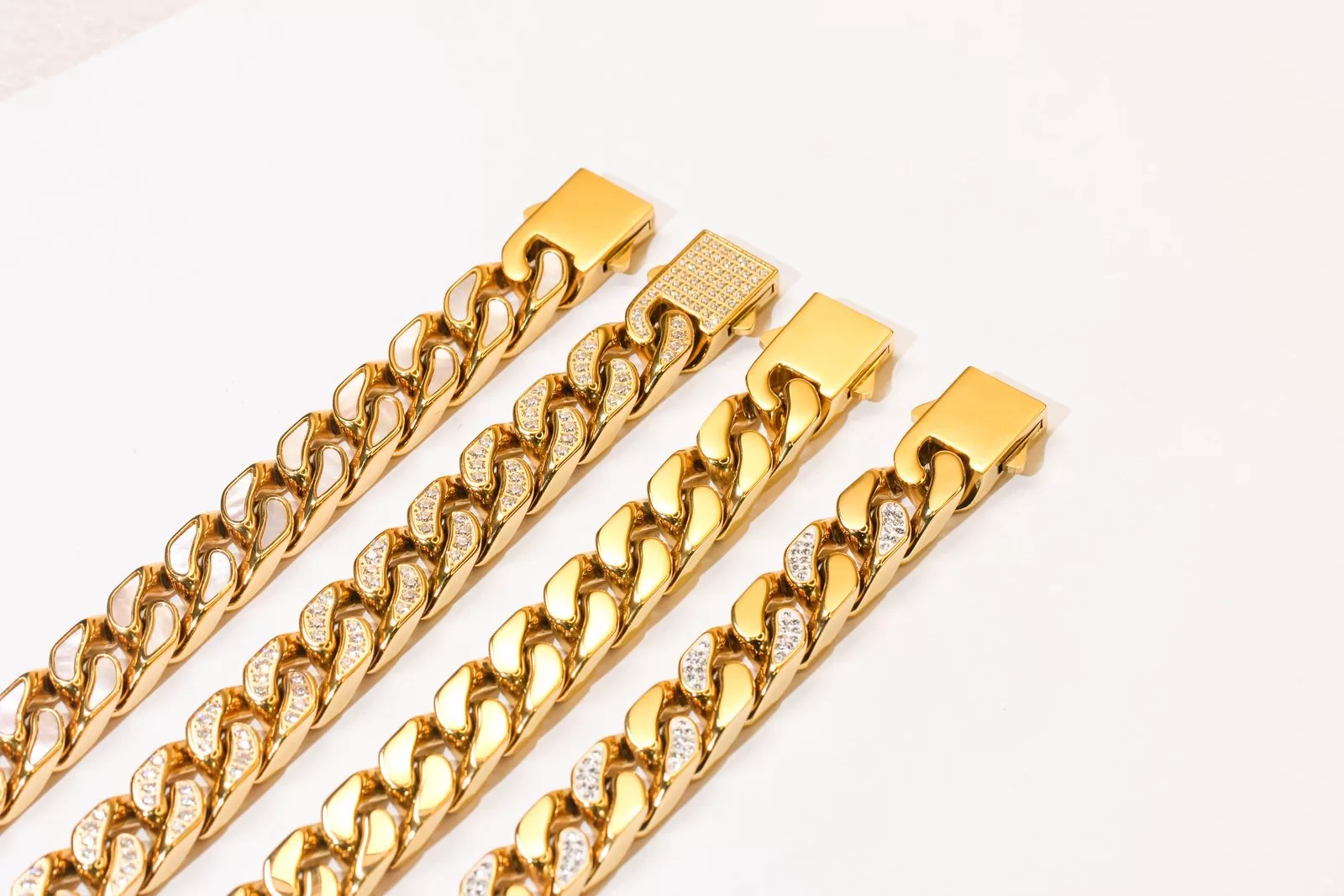

Ask five jewelers what a gold Cuban link chain costs and you will get five different answers, all of them technically correct. A plated 6mm chain can cost less than a dinner out. A solid 14K 12mm chain at 24 inches can cost as much as a used car. Most of what you see falls somewhere between, and the gap is explained by a handful of factors you can check yourself.
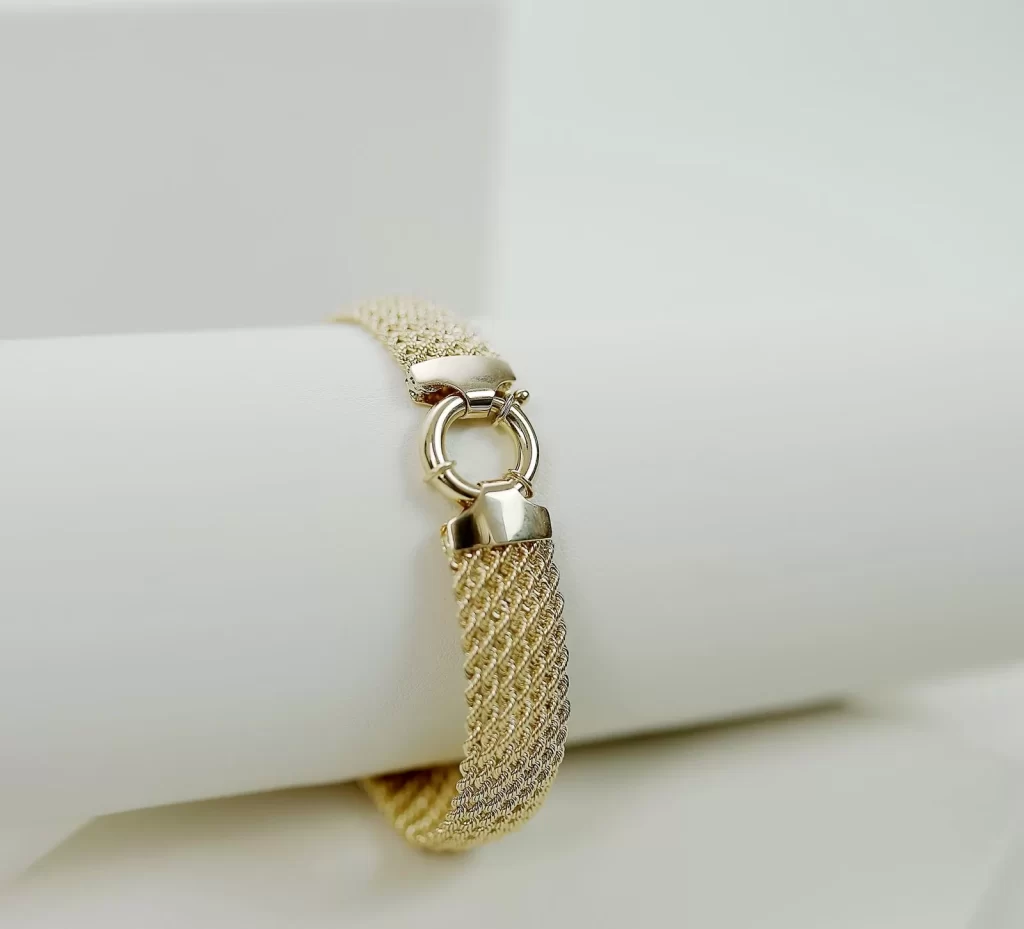
This article breaks those factors down so you can look at any price tag and understand roughly where the money is going.
Factor 1: the price of gold itself
For a solid gold chain, the single biggest cost is the metal. Gold is priced per troy ounce (about 31.1 grams), and that price moves every trading day. A jeweler’s price list from six months ago may already be out of date.
The raw gold in a chain depends on two numbers: its weight in grams and its karat. A 14K chain is about 58.5% pure gold. So a 50-gram 14K chain contains roughly 29 grams of pure gold. Multiply that by the current price per gram of pure gold and you have the melt value, the floor below which a solid chain should never sell.
You can do this sum in a minute with a phone calculator. It is the most useful thing a buyer can learn, because it instantly shows whether a price is in a sensible range or wildly off.
Factor 2: karat
Higher karat means more gold per gram, so the same chain in 18K costs more than in 14K, which costs more than in 10K. As a rough guide, an 18K chain has about 28% more gold than an otherwise identical 14K chain, and a 14K chain has about 40% more gold than a 10K one. Price differences at retail usually follow those ratios, plus a little extra for 18K because it is less commonly stocked.
Factor 3: weight, width and length
Weight rises quickly with width. Doubling the width of a solid Cuban link does not double the weight; it roughly triples or quadruples it, because the links also get thicker. Length adds weight in a straight line: a 24-inch chain weighs about a third more than an 18-inch chain of the same width.
That is why a 10mm solid chain often costs several times as much as a 5mm chain, not twice as much. If a price for a wide chain seems surprisingly low, check whether it is hollow.
Factor 4: solid, semi-solid or hollow
Hollow Cuban links use far less gold for the same visible width, so they are much cheaper. A hollow 10mm chain might weigh a third of a solid one. That is a genuine saving, but hollow links are more prone to denting and are difficult to repair. Semi-solid chains sit in between on both price and durability.
When comparing prices between sellers, make sure you are comparing like with like. A solid chain and a hollow chain of the same width and length are different products.
Factor 5: labor, design and making charges
On top of the metal, every chain carries a making charge. This covers the work of forming, linking, soldering, polishing and finishing the chain. Machine-made chains have lower making charges. Handmade chains, tighter link patterns, diamond-cut edges and custom clasps all add to it.
Making charges vary widely. On a light chain they can be a large share of the price; on a heavy solid chain they are usually a smaller percentage, because the metal dominates.
Factor 6: stones and iced-out details
An iced-out Cuban link set with stones is priced very differently from a plain chain. Natural diamonds add the most. Lab-grown diamonds cost less. Moissanite costs less again, and cubic zirconia costs very little. The number of stones, their size and the setting style (prong, pavé, channel) all matter. For iced chains, the stones and setting work can easily outweigh the gold.
Factor 7: brand, retailer and location
A chain from a well-known designer or a high-street luxury store will carry a premium for the name, the showroom and the service. Online-only sellers and wholesale-style jewelers often charge less for similar metal. Local markets and gold districts in many cities are known for lower making charges, but quality varies, so the same checks apply anywhere.
Rough price bands
Prices move with the gold market, so treat these as orientation rather than quotes:
- Gold-tone stainless steel or brass: very inexpensive, often the price of a casual accessory.
- Gold plated or vermeil: low to moderate, depending on the plating thickness and base metal.
- Gold filled: moderate, a step up in durability over plating.
- Hollow 10K or 14K: a few hundred dollars for slim to medium widths, rising with width.
- Solid 10K or 14K, 4–7mm: often in the high hundreds to low thousands.
- Solid 14K, 8–12mm: commonly several thousand dollars, depending on length and weight.
- Solid 18K, wide, or iced out with diamonds: from several thousand into five figures and beyond.
How to judge whether a price is fair
- Get the karat and exact weight in grams.
- Work out the melt value using the day’s gold price.
- Compare the asking price with the melt value. For a plain solid chain, a premium of a moderate percentage over melt is normal. A price close to melt is a good deal; a price several times melt for a plain machine-made chain is expensive.
- Compare with two or three other sellers for the same karat, weight and construction.
- Factor in the return policy and warranty. A slightly higher price from a seller with clear returns can be worth it.
Where people overpay
The most common ways buyers overpay are paying solid-gold prices for hollow or plated chains, buying without knowing the weight, and paying a large premium for stones that are actually cubic zirconia. All three are avoided by asking the right questions before paying.
The other common mistake is going wider than you need. Because weight climbs so quickly with width, dropping from 10mm to 8mm can save a large share of the price while still giving a strong look on most people.
Ways to save without regret
- Choose 14K or 10K instead of 18K for a daily chain.
- Go one or two millimeters narrower.
- Consider a slightly shorter length if it still sits where you like it.
- Buy machine-made for a plain chain, and save handmade for a piece where craftsmanship matters to you.
- Try your preferred width in an inexpensive steel or plated version first, so the expensive purchase is the right one.
Once you know the weight and karat, a gold Cuban link chain stops being a mystery price. It becomes metal plus labor plus margin, and you can decide which of those you are happy to pay for.
Shopping for a chain?
Compare current prices, weights and reviews for solid gold cuban link chain options on Amazon. Always check the stated karat, construction and gram weight before you buy.
